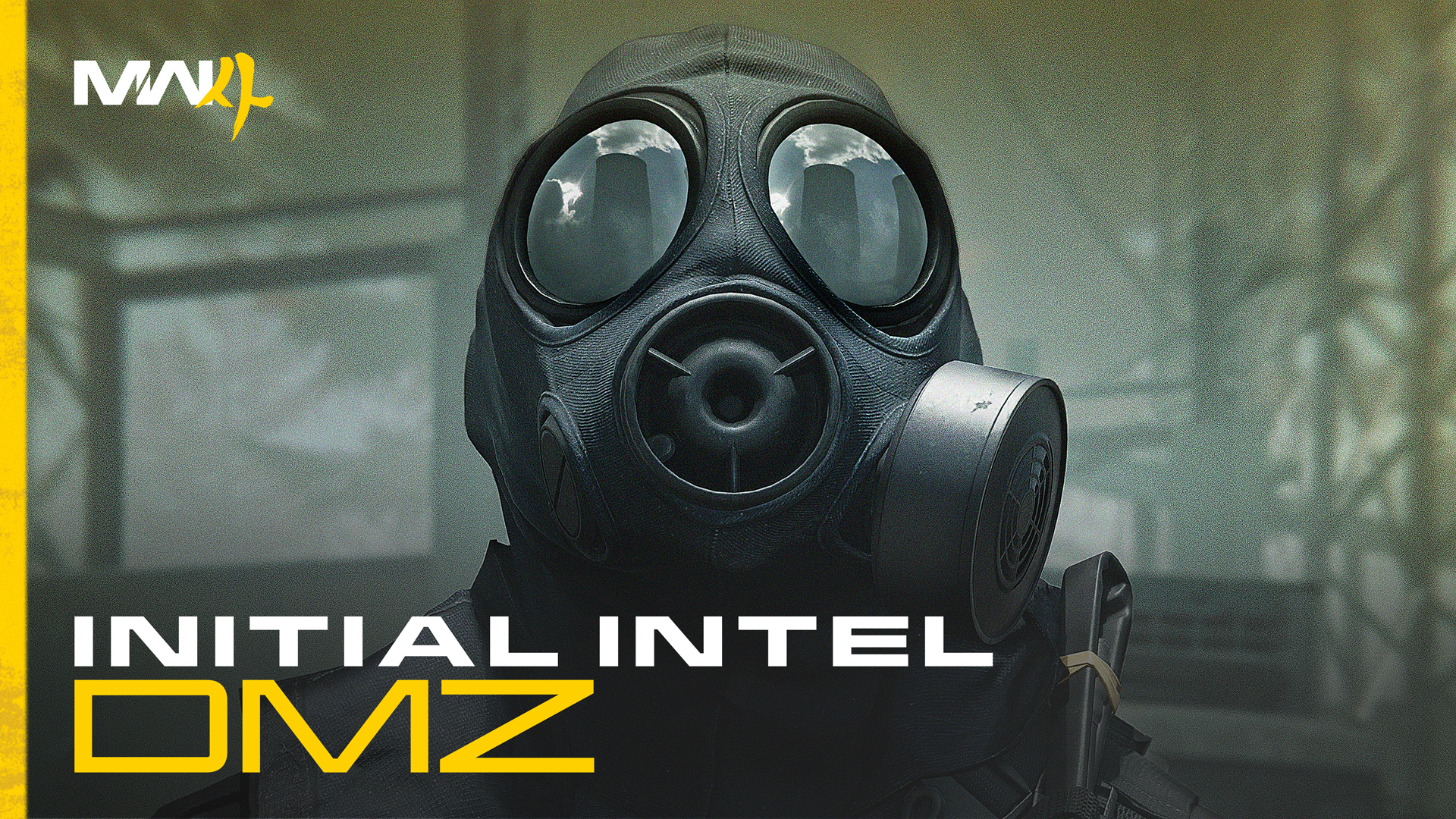
Call of Duty's DMZ mode has a messy history. The original beta launched with Modern Warfare II in 2022, showed something with real potential, and then quietly disappeared without explanation. No big announcement. Activision just moved on. Fans who had invested time into the contracts and loot system were left with nothing.
Four years later, DMZ is back. Infinity Ward closed out the Xbox Games Showcase 2026 with a full reveal of the mode, and the trailer made one thing clear immediately: this is not an update to the old beta. It has been built from the ground up with a real map, proper narrative context, and interconnected systems that actually talk to each other.
The trailer runs as a squad operation. Three operators insert into the Hajin Exclusion Zone. One goes down fast. The remaining two improvise, fight through contacts, grab intel, extract a high-value target under pressure, and try to reach extraction before things fall apart completely. It moves quickly enough that it takes a second viewing to catch everything happening in the background. But the core loop is readable from the first watch: get in, do the job, get out alive, or don't.
Here is a full breakdown of what the trailer and the official Infinity Ward deep dive actually reveal about the mode.
The Setting: Hajin Exclusion Zone
DMZ does not use a standard Call of Duty map. The Hajin Exclusion Zone ties directly to the single-player campaign, where a nuclear reactor melts down and creates a radioactive dead zone. DMZ picks up in the aftermath of that event.
Hajin sits at a convergence point bordering South Korea, North Korea, and Russia. The exclusion zone covers a large area broken into distinct regions: a fallout reactor, a prison complex, the ruins of Hajin City, and a heavily defended military base. Each region carries its own risk level and its own payoff. Hidden areas accessible only through water routes are scattered throughout, and the map is built around the idea that players who actually explore the space will find things that players who run straight to extraction never will.
The connection to the campaign is more than just a shared location. Everything from the single-player sequence where the reactor melts down is left frozen in place. Joe Cecot, studio multiplayer creative director at Infinity Ward, described it as making the map into a character. The environment tells the story of what happened without a cutscene or a loading screen explanation. Hajin is not a neutral arena. It is a specific place with a specific history, and that shapes how players move through it.
Weather changes conditions on every deployment. Fog cuts sightlines. Downpours reduce visibility and force route changes. Overcast conditions shift the math on outdoor engagements. Infinity Ward made a point of saying the weather is not cosmetic. It affects detection, movement decisions, and how firefights develop. Two runs of the same mission can play out completely differently based on what conditions are active when you land.
Three Ways to Play
DMZ launches with three modes nested inside it, and they target different types of players.
Story missions are the most structured option. When players select a story mission, they get matched with other players running the same objective. The sequence in the trailer looks like a story mission: a defined target, a clear extraction goal, and shared context for everyone on the team. These missions feed into a larger narrative thread running through the exclusion zone and tied to the broader Modern Warfare 4 story.
Dynamic operations sit in the middle. Earlier Call of Duty contracts randomized locations but kept the actual steps fixed, which meant players optimized the same route after a few runs and the whole thing became rote. Infinity Ward changed how this works. In dynamic operations, the main objective arrives when boots hit the ground, but the steps taken to reach that objective are different every time. One run has players downloading intel before taking out a target. The next run flips the order, introduces a missile launch that needs stopping first, and changes which route is viable. The goal is that players cannot build a checklist and run it on autopilot.
Free roam is open-ended by design. Players who understand the map well enough can hunt targets independently, collect dog tags, interfere with other squads running story missions, or just see how long they can stay alive while the star system cranks up the pressure. The casino mentioned in the briefing is a free roam destination where players can actively disrupt others doing a heist mission there. The mode rewards situational awareness and map knowledge over mechanical skill alone.
The Star System and How AI Escalates
One of the more interesting new mechanics is how the AI responds to what players do in the field. Killing enemy AI raises a star level. As that star level climbs, harder AI responds. Tanks move through the terrain. Air assets become active. Lieutenants and commanders replace the standard grunts. The world does not just sit there waiting to be cleared.
"You push and the world pushes back." — Joe Cecot, Multiplayer Creative Director, Infinity Ward
That creates a real decision point that earlier extraction games in the genre have handled inconsistently. Players can try to stay quiet, take only what they need, and get out before the star level becomes a problem. Or they can go loud, take on the escalating threats, and extract with more gear at the cost of a much harder exit. Neither approach is obviously correct, which is what makes it interesting.
The new stealth system supports the quieter approach. An alert indicator tells players when an AI is about to spot them, giving a window to break contact before a full detection triggers. For the story missions where infiltrating an active base without getting every enemy in the area on alert is part of the objective, that system matters a lot.
The Bounty System
PvP in DMZ has always had an awkward tension. Pure extraction players resent getting hunted by people who only log in to kill operators. The original beta never resolved this cleanly.
MW4's answer is a reputation and bounty mechanic. Killing other players builds a hidden reputation score. Cross a threshold and a bounty gets placed on your head automatically. Another player kills you, grabs your dog tag, and sees that the tag carries a bounty. They extract it and claim the reward. Keep killing players and the status escalates to Wanted, at which point other operators in the match can pay in-game intel to buy your location and come after you directly.
Geoff Smith, co-creative director at Infinity Ward, described the end state: a leaderboard tracking the top fifty players in both the Wanted and Bounty Hunter categories each week. The most dangerous operator in the zone and the hunter who takes them down both get recognized.
Whether this actually solves the griefing problem depends on execution. The system is clever in theory: it does not stop players from being aggressive, it just makes aggression carry a cumulative cost that other players can profit from. But the ecosystem only functions if enough people are actually engaging with the bounty hunter side. If nobody is cashing in the dog tags, the Wanted system does not create the pressure it is supposed to.
The Game Informer preview noted that the Wanted flag also shows an on-screen indicator when a Wanted player is nearby, which adds another layer to the detection side. That is a meaningful deterrent even for players who are not actively hunting.
Forward Operating Base and Gear Persistence
Progression lives between matches, not inside them. After each deployment, players return to a Forward Operating Base. As DMZ rank increases, new stations unlock: a 3D printer, a crafting station, a gunsmith, a stash for persistent inventory, a vendor, and a Bounty Board. The FOB is the hub where gear carries over, where crafting happens, and where the session-to-session investment lives.
The stash system matters because what players bring into a match is what they can lose. Guns, plate carriers, backpacks, and killstreaks are all lootable and all extractable, but dying means losing them. Gear found inside the zone and materials collected throughout Hajin feed back into the crafting system, letting players fill specific loadout gaps rather than just hoping to find the right weapon in the field.
Operator selection ties into the risk calculation. A well-equipped operator who goes MIA can be recovered by purchasing a rescue extraction, but the cost increases every time that same operator needs to be pulled out. There is a point where the math stops making sense and the gear that operator carried is simply gone. That creates a real attachment to specific operators and a real consequence for playing recklessly with a loadout that took time to build.
What Is Actually Different From the Beta
The 2022 beta was a proof of concept that never got finished. Systems were disconnected. There was no narrative reason to care about the zone. Contracts repeated in ways that made the mode feel like a grind after a dozen sessions. The most consistent criticism was that nothing accumulated. You could put in hours and feel like you were going sideways rather than forward.
The campaign connection addresses the narrative problem directly. The Hajin Exclusion Zone is a place players visit in the single-player story before they deploy into it in DMZ, which means arriving with context that the beta never provided. The FOB progression gives something concrete to build toward. The randomized operation steps attack the repetition problem. The bounty system adds a social layer to PvP that goes beyond raw firefight outcomes.
Cecot called the original beta a proving ground. Looking at what MW4's DMZ is bringing, that framing holds up. The beta generated enough player feedback and internal data that Infinity Ward spent four years figuring out what was actually missing. Whether the rebuilt version delivers on what the beta promised is still an open question, but at least the identified gaps have specific answers in the new design.
The extraction genre has also moved considerably since 2022. Escape from Tarkov remained the reference point, but ARC Raiders and Marathon both released and gave players more comparisons to make. Activision is entering a more crowded market than the one the beta launched into, with players who have much sharper opinions about what extraction modes need to get right.
Release Details
Call of Duty: Modern Warfare 4 launches October 23, 2026 on PlayStation 5, Xbox Series X/S, PC via Battle.net, Xbox on PC, Steam, and Nintendo Switch 2. DMZ ships at launch as part of the game, not as a separate free-to-play release. Infinity Ward confirmed it runs alongside Warzone rather than replacing it.
Preorders are open now across participating retailers and platform stores.
The trailer tagline: "Enter the DMZ. Many squads will infil. Not all will exfil." That is one of the more honest marketing lines a Call of Duty game has used in a while. The mode is not trying to be comfortable. It is trying to be a place where things go wrong and the ones who made it out have a story to tell.
October 23 is the test.