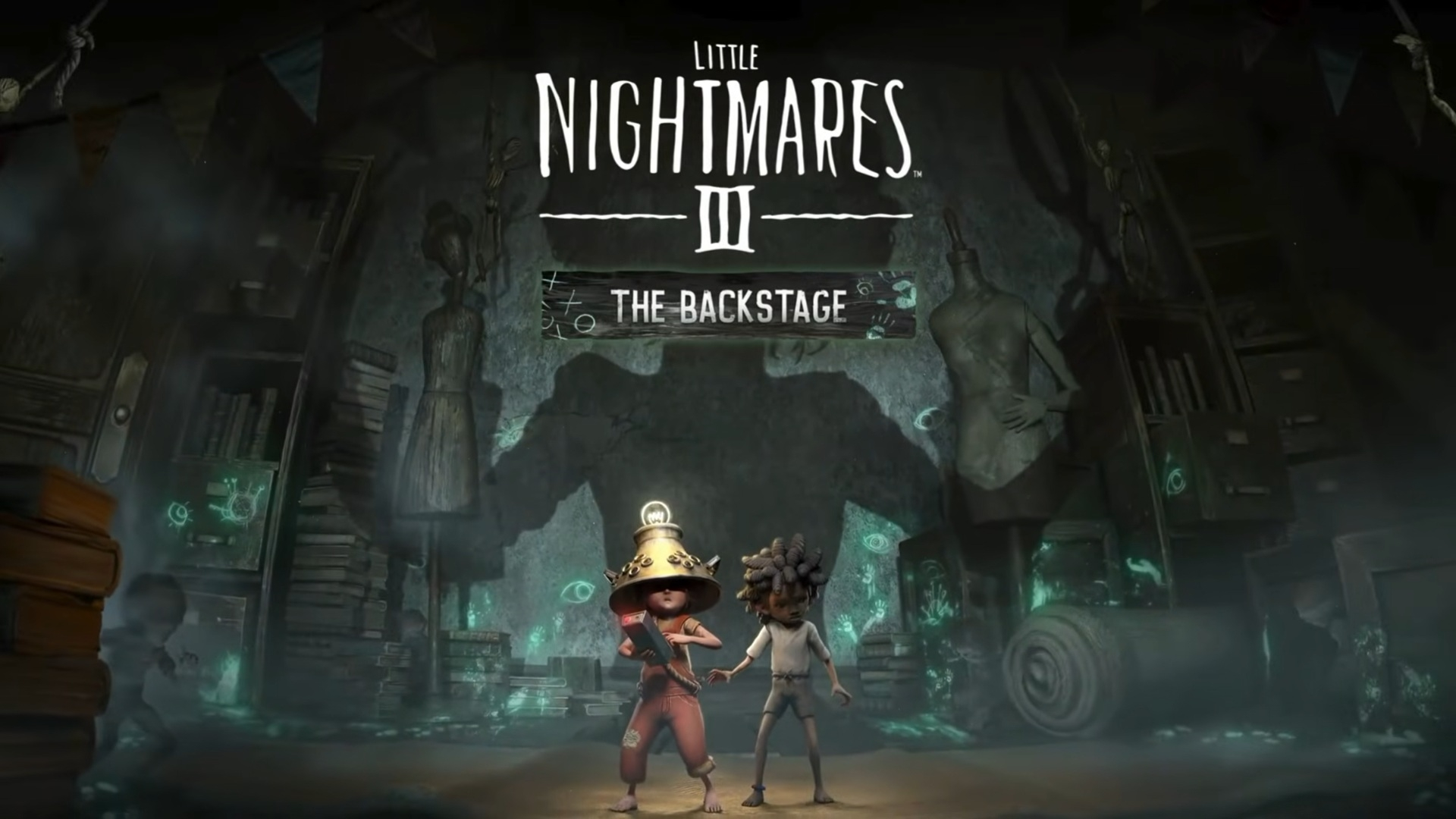
The Backstage is the first story DLC for Little Nightmares III, out today on every platform the base game supports: PS5, PS4, Xbox Series X/S, Xbox One, PC, Nintendo Switch, and Switch 2. It is the first chapter of the Secrets of the Spiral Expansion Pass, with a second chapter slated for somewhere between October and December 2026. If you bought the Deluxe Edition of the game, you already have it. If not, it is available separately.
This article breaks down what the full walkthrough reveals: the setup, the characters, the areas you move through, the enemies you face, and how it ends. There are spoilers from here on.
The Setup: Low and Alone Get Separated
The Backstage does not follow both protagonists from the main game. Alone gets taken. Low goes looking. That separation is the engine that drives the whole DLC, and it is a smart framing device because it pulls Low out of the co-op dynamic that defined the base game and drops him somewhere genuinely new and worse.
Where he ends up is the underside of the Carnevale, the twisted carnival location from Little Nightmares III's main story. The surface of the Carnevale already had plenty going on, but The Backstage makes the case that everything visible from the front was a distraction from what was happening behind the curtain. The environments underneath are darker, narrower, and considerably less interested in keeping up the pretense of entertainment.
The DLC's central threat is the Puppeteer. She is described officially as hunting the living canvas for her next masterpiece, which is a more specific and more unsettling way of putting it than just calling her a villain. The implication, which the walkthrough makes clearer as it progresses, is that she is an artist working in a medium nobody consented to. Alone is her latest subject. Low and his new companion Dime are obstacles.
Dime and the Torch Hat
Dime is the new character introduced in The Backstage, and she is the more mechanically interesting addition. She wears a torch hat, which is exactly what it sounds like: a hat with a light source built into it. In a DLC where the environments are built around darkness and what lives in it, having a companion who literally carries the light changes how you navigate spaces.
The Backstage uses this in ways that feel specific to Little Nightmares rather than just bolted on. Light in this series has never been neutral. In the Carnevale's underbelly, staying close to Dime is not just a preference, it is the condition for surviving certain areas. The torch hat illuminates what is hiding in corners and ceiling spaces, and the walkthrough shows that several of the DLC's chase sequences are structured around how far Dime's light reaches versus how fast things move when they catch you in the dark.
Dime herself is described as a companion in despair, which fits the Little Nightmares tradition of giving child characters a particular kind of resigned sadness rather than innocence. She is not a cheerful guide. She is surviving the same situation Low is, just with a more useful hat.
Dime is the sole light Low can trust in The Backstage. Whether that is enough to get Alone back from the Puppeteer is the question the DLC is built around.
The Enemies: Shadow Kids, the Herd, and the Puppets
The Backstage introduces three new enemy types alongside the Puppeteer herself, and they each reflect a different aspect of what the Carnevale is doing to its inhabitants.
The Shadow Kids are blindfolded children, which is a detail the Little Nightmares wiki documents specifically. Blindfolded enemies in horror games tend to mean something: they have been prevented from seeing, or they have been made to not need to. The walkthrough shows them used in sections where the light from Dime's hat becomes a liability as much as a tool, because light attracts attention from things that do not use their eyes.
The Herd are bloated Residents, the same class of grotesque adult figures that populate the rest of the Little Nightmares world, except that these ones are petrified within the Backstage. They attend the Carnevale as audience members, or they used to. Now they are stuck in the architecture of it, and Low has to navigate through and around them.
The Puppets are smaller, humanoid Residents who work the space. They are not petrified. They move. The walkthrough shows them used in the mid-section of the DLC as mobile patrol threats rather than environmental obstacles, which shifts the pacing from the slow dread of the Herd sections into something more directly reactive.
The Stitcher: The Boss Fight
The Stitcher is the name of the final encounter in The Backstage. Based on the walkthrough, this is a distinct entity from the Puppeteer, operating more as the instrument of her work than the architect of it. The name and the context within the Carnevale suggest what it does: it is the mechanism by which the Puppeteer's masterpieces get made.
The boss fight plays differently from the chases and evasion sequences that dominate the earlier sections. Little Nightmares rarely gives you the option to fight directly, and The Backstage follows that pattern. The Stitcher encounter is closer to a pattern-reading puzzle under pressure than a conventional boss fight, which has been the franchise's approach since the first game. You survive it by understanding what it does and staying out of the sequence of events it is trying to run.
The ending that follows is in line with how Little Nightmares handles its conclusions: not tidy, not triumphant, and open enough that the second DLC chapter has room to continue from where this one leaves off.
The Backstage ends, but the Secrets of the Spiral pass continues. Chapter 2 is coming between October and December 2026. Whatever the ending here sets up, the story is not finished.
How Long Is It, and Is It Worth It
The full 4K walkthrough runs just under the length you would expect from a focused DLC chapter, not a short bonus level and not a full standalone game. Based on the footage, a first playthrough for someone exploring rather than rushing sits somewhere around two to three hours. Little Nightmares games are not designed for speed. The environments reward attention, and The Backstage has enough new visual detail in the Carnevale's underbelly that moving quickly would mean missing most of what it is actually doing.
The Secrets of the Spiral Expansion Pass covers this chapter and the second one due later in the year. Bandai Namco has not confirmed individual pricing for The Backstage outside of the pass, but the Deluxe Edition of the base game includes both chapters. If you finished Little Nightmares III and wanted more time in that world, this is the direct continuation. If you bounced off the base game, nothing about The Backstage changes the fundamental structure: it is the same kind of experience, in a darker part of the same location, with a new character and new things chasing you.
What the DLC Adds to the Wider Story
Little Nightmares has always been a series where the lore sits at the edge of what is shown rather than being explained. The Backstage fits that pattern. The Puppeteer as a character adds a specific kind of threat to the Carnevale that the main game only implied. She is not an abstract force. She has intentions, she has a method, and the Stitcher is the tool she uses to carry it out.
What the DLC does not do is resolve the broader questions about The Spiral and where Low and Alone are going. The Little Nightmares wiki's description of the DLC notes that Alone is Low's imaginary friend manifested in the Nowhere, which is a detail that complicates the rescue premise in ways the walkthrough does not fully untangle. If Alone is a manifestation rather than a separate person, then what the Puppeteer has captured and what Low is trying to recover are harder to define than the setup makes them seem. The second chapter will have to deal with that.
The Backstage is a confident first chapter for the Secrets of the Spiral pass. It adds a meaningful amount of new content, introduces characters and enemies that feel specific rather than generic, and ends on something that demands a follow-up. Whether the October to December window for Chapter 2 holds is the next thing to watch.